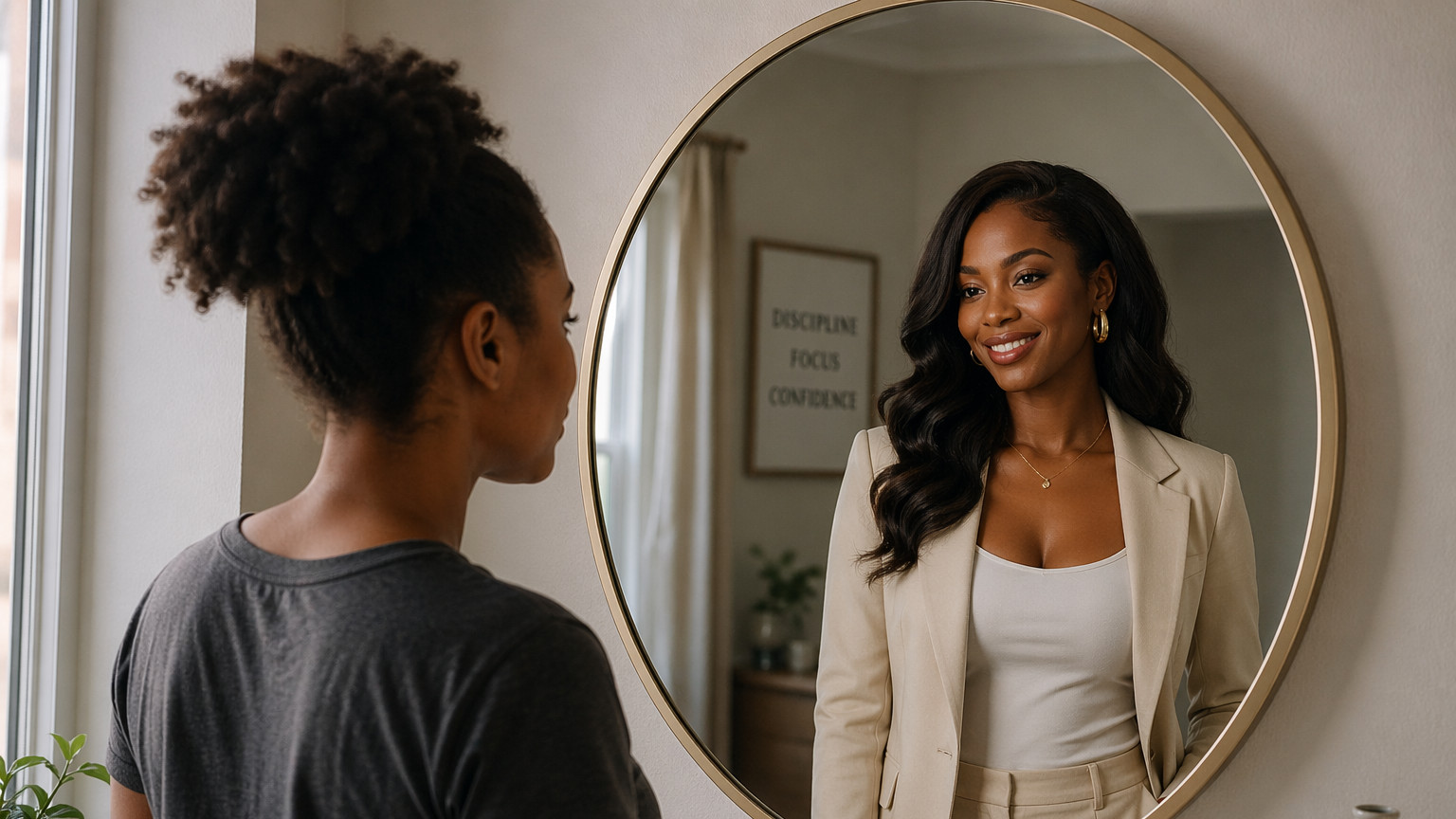

Choosing Love Without Losing Yourself
Love should expand you, not erase you.
We’ve spent this month peeling love apart — telling it apart from attachment, tracing it back to what you believe you deserve, watching how it holds up against honesty and boundaries in real relationships. So let’s bring it all together with the question underneath all of it: how do you actually stay in love with someone without slowly disappearing into them?
Because that’s the quiet danger nobody warns you about. Not heartbreak. Erosion.
The Disappearing Act
There’s a version of “devotion” that gets celebrated everywhere — the person who gives everything, adjusts everything, absorbs everything, all in the name of love. We call it selfless. We call it loyal. Sometimes we even call it romantic.
But look closer, and a lot of that isn’t devotion. It’s self-erasure wearing devotion’s clothes.
You already have the pieces to recognize it, if you think back over this month. Attachment mistakes intensity for love — and self-erasure often comes from that same fear, the terror of losing someone becoming so loud it drowns out your own needs. Self-worth sets your ceiling — and when that ceiling is low, “losing yourself for love” doesn’t feel like a warning sign. It feels like what love is supposed to cost. Real love holds up under honesty and boundaries — and if you’ve stopped bringing your honest self to a relationship because it’s easier to just agree, you’re not really in that relationship anymore. You’re managing it.
Put those together, and you get the real definition of losing yourself in love. It’s not one dramatic moment. It’s a thousand small ones — the opinion you didn’t share, the need you talked yourself out of, the boundary you let slide “just this once” — each one small enough to explain away, until one day you look up and can’t quite remember who you were before you started shrinking.
What It’s Supposed to Cost You
Real love was never supposed to require you to disappear. That’s not what makes it deep — that’s just what makes it costly. A relationship that only works because one person keeps getting smaller isn’t a great love story. It’s an unsustainable one, and eventually something breaks: the relationship, or you.
Here’s the shift — love, at its healthiest, has room for two full people in it. Not one person and one accommodation. Not one personality and one supporting role. Two people, each still whole, still opinionated, still capable of disagreeing and staying. The relationship doesn’t need you to shrink in order to fit into it. If it does, that’s not a relationship you’re meant to keep contorting yourself for — that’s one that needs an honest conversation, or an honest ending.
This is also, by the way, what “soft life” actually means when it comes to love — not a relationship with no effort, no friction, no hard conversations. A soft life in love is one where you’re not constantly performing, managing, or shrinking to keep the peace. It’s the release of that particular kind of exhausting effort — the effort of being someone else to be kept.
Staying Whole While Staying In It
So how do you actually build this into how you love, going forward — not just understand it, but live it?
Start with a monthly self-check. Once a month, ask honestly: do I feel more like myself in this relationship than I did six months ago, or less? Not perfect — just, more you or less you. Trends matter more than single moments.
Keep one non-negotiable that’s just yours — a friendship, a hobby, an opinion, a boundary — something you don’t let a relationship slowly absorb. It doesn’t have to be big. It just has to stay yours.
Practice staying in disagreement a little longer before you fold. Not to be difficult — to notice how quickly you default to agreement, and whether that’s coming from genuine flexibility or quiet fear.
And when you feel yourself shrinking, name it out loud — to yourself first, and eventually to the person, if the relationship can hold it. “I think I’ve been going along with things I don’t actually agree with” is a hard sentence to say. It’s also usually the one that starts things changing.
Love, done well, doesn’t ask you to choose between having the relationship and having yourself. If you’ve been operating like it’s one or the other, that’s not proof you love too much. It’s proof it’s time to bring your full self back into the room — and see who’s still standing there with you when you do.